
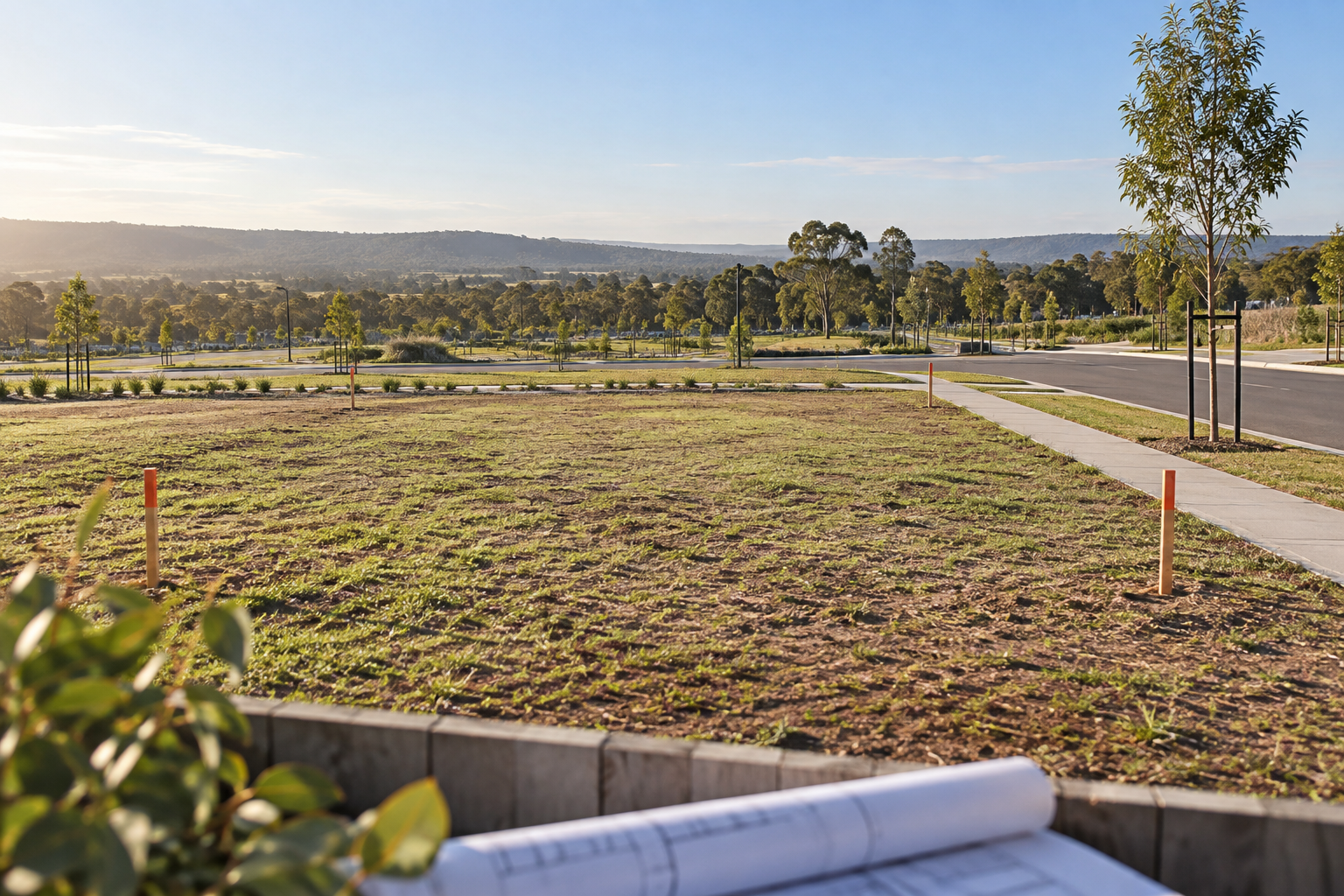
Buying land can give you more control over the design, timing and priorities of your future home. It also requires a different kind of due diligence from buying an established property.
In Menangle Park, buyers may need to consider the registration status of the lot, estate-specific design guidelines, planning controls, the suitability of a proposed home design, building costs and the timing of finance and settlement. The right block is not simply the one with the preferred area or frontage. It is the block that works with your contract, budget, builder and long-term plans.
This guide explains the main questions to work through before purchasing land in Menangle Park. It is general information only. A solicitor or licensed conveyancer should review the contract and advise on your individual circumstances before you exchange.
1. Confirm whether the land is registered
A registered lot has its own title and deposited plan recorded with NSW Land Registry Services. Subject to the contract, finance and other requirements, it can generally proceed towards settlement within an agreed period.
An unregistered lot is commonly purchased off the plan before the subdivision has been completed and registered. Settlement will usually occur after registration, which means the expected timeframe may change.
Before committing, ask:
- Is the lot registered now?
- If not, what is the current estimated registration period?
- What does the contract say about extensions, sunset dates and delays?
- What happens if the final registered plan differs from the disclosure material?
- When will the lender complete its valuation and issue final approval?
- Does your building quote remain valid if registration is delayed?
NSW off-the-plan protections include a 10-business-day cooling-off period. Developers must also provide the final registered plan and associated documents at least 21 days before a purchaser can be required to settle. Material changes may give purchasers additional rights, depending on the circumstances. Read the NSW Registrar General’s off-the-plan guidance and obtain advice on the specific contract.
2. Have the contract reviewed before exchange
The contract for sale is the legal foundation of the purchase. It may include the title documents, proposed or registered plan, easements, restrictions, covenants, planning information, settlement provisions and special conditions.
Your solicitor or licensed conveyancer can help identify matters such as:
- easements for drainage, services or access;
- restrictions on the use of the land;
- positive covenants and maintenance obligations;
- developer design and approval requirements;
- settlement timing and default provisions;
- adjustments, levies or other amounts payable;
- provisions dealing with plan changes or delayed registration; and
- whether the contract is consistent with your intended use of the land.
Exchanging contracts creates a binding legal relationship. Cooling-off rights can vary according to the transaction and can be waived in some circumstances. Do not rely on a cooling-off period as a substitute for legal review. See NSW Fair Trading’s contracts and deposits guidance for an overview.
3. Check that the block suits the home you want to build
Lot area is only one part of building suitability. Frontage, depth, orientation, slope, easements, setbacks and the location of services can all influence what can be built and how much usable outdoor space remains.
Before choosing a lot, give the registered or proposed plan to your preferred builder or designer. Ask them to assess:
- whether the proposed home fits the lot and required setbacks;
- the driveway and garage arrangement;
- solar orientation and natural light;
- private open space and landscaping requirements;
- retaining walls, cut and fill, dropped-edge beams or other site works;
- the effect of easements and service locations;
- the suitability of the lot for single- or double-storey construction; and
- whether the chosen design requires a DA or may qualify for a CDC.
A standard floor plan shown on a builder’s website is not confirmation that the design will fit a particular lot. Obtain a lot-specific assessment and a written schedule of inclusions and exclusions.
4. Use the design guidelines for the correct stage
Menangle Park uses design guidelines to coordinate building outcomes and streetscapes. The applicable document can vary by stage and sub-stage, so a guideline from another release may not apply to your lot.
The guidelines may address matters such as building form, façades, materials, setbacks, fencing, landscaping, corner lots and estate approval procedures. They operate alongside, rather than instead of, council and NSW planning requirements.
Use the lot number to identify the relevant stage, then obtain the current stage plan and guideline. Menangle Park provides a lot index and stage-specific design approval documents. Ask your builder to confirm in writing that the proposed design has been checked against the correct version.
5. Review planning controls and land constraints
A Section 10.7 Planning Certificate provides information about the zoning, planning instruments, controls and certain hazards or constraints affecting a specific parcel. The prescribed certificate must be attached to a contract for sale.
Depending on the land, relevant matters may include flooding, bushfire-prone land, contamination, biodiversity, road proposals or other controls. A full Section 10.7(2) and (5) certificate may include additional information held by the council.
Your legal adviser should review the certificate in the contract. You can also learn more through the NSW Planning Portal’s Planning Certificate guidance. Planning information should be assessed together with the title, deposited plan, design guidelines and advice from the builder or certifier.
6. Establish a realistic total project budget
The land price is not the complete project cost. A useful budget should also allow for applicable duty and legal costs, loan fees, design work, approvals, site works, construction, variations, landscaping, fencing, window furnishings, driveways and the items excluded from the building contract.
Before signing a building contract:
- obtain a site-specific proposal rather than relying only on a base price;
- request a detailed inclusions and exclusions schedule;
- ask which amounts are fixed and which remain provisional;
- understand how soil, slope, retaining and service connections are treated;
- allow a contingency appropriate to your project; and
- compare quotes on the same scope, not only the headline price.
NSW guidance recommends reading the entire building contract, checking special conditions and understanding how written variations can affect the final price. The NSW Planning Portal’s approval and building-contract guide provides a useful starting checklist.
7. Coordinate the land contract, finance and building process
Finance for vacant or unregistered land may not operate in the same way as finance for an established home. A lender may assess the land purchase and the future construction facility separately. Valuations, final approval and building-contract requirements may also be affected by registration timing.
Discuss the following with your lender or broker:
- the deposit and genuine-savings requirements;
- the loan-to-value ratio used for vacant land;
- when a valuation will be completed;
- whether approval will need to be refreshed before settlement;
- construction-loan conditions and progress payments;
- the time allowed to commence building; and
- the effect of a registration or construction delay.
Keep the solicitor or conveyancer, lender, agent and builder informed of important dates. Do not assume that an indicative finance approval or builder estimate will remain valid indefinitely.
8. Check current NSW duty and buyer-assistance rules
Transfer duty and government assistance can materially affect the funds needed at settlement. Eligibility depends on the buyers, property, value, intended use and contract date.
As at 30 July 2026, the NSW First Home Buyers Assistance Scheme states that eligible first-home buyers purchasing vacant land on which they intend to build may receive:
- a full transfer-duty exemption for land valued at up to $350,000; or
- a concessional rate for land valued above $350,000 and below $450,000.
Thresholds and eligibility rules can change. Check the current Revenue NSW First Home Buyers Assistance Scheme and obtain advice before relying on an exemption or concession.
9. Understand the approval pathway
Your home may require a Development Application and Construction Certificate, or it may qualify for a Complying Development Certificate if all applicable standards and land requirements are met.
A CDC combines planning and construction approval for eligible straightforward development. It is not available merely because a design is a project home. The land and proposal must satisfy the relevant standards. A BASIX certificate and supporting plans will also usually form part of the approval process.
Ask your builder, designer or certifier:
- which approval pathway is proposed;
- which planning controls and design guidelines have been checked;
- who is responsible for estate design approval;
- who will prepare BASIX and other supporting documents;
- which fees and authority requirements are excluded from the quote; and
- what must occur before construction can commence.
The NSW Planning Portal’s complying development overview explains the role of CDCs and registered certifiers.
10. Look beyond the individual lot
Menangle Park is a substantial masterplanned release area within the City of Campbelltown. Plans for the broader area include housing, a town centre, employment land and educational, community, recreation and transport infrastructure. Delivery occurs over time and may be affected by approvals, construction sequencing and other factors.
Review what exists now separately from what is planned for the future. Consider:
- access to current transport, shopping, schools and health services;
- planned roads, parks and community infrastructure;
- nearby construction and the likely duration of development activity;
- the lot’s position within its stage;
- orientation, outlook and adjoining land uses; and
- whether the location suits your daily travel and long-term needs.
Campbelltown City Council publishes information about the Menangle Park Release Area Planning Agreement, including infrastructure commitments. Planned facilities and timing should not be treated as guaranteed until delivered.
A practical pre-purchase checklist
Before exchanging contracts, confirm that you have:
- identified whether the lot is registered or unregistered;
- obtained independent legal advice on the contract;
- reviewed the title or proposed plan, easements, covenants and restrictions;
- checked the correct Menangle Park stage plan and design guidelines;
- reviewed the Section 10.7 Planning Certificate;
- asked a builder to complete a lot-specific design and site assessment;
- received a detailed building inclusions and exclusions schedule;
- allowed for site works, approvals, landscaping and a contingency;
- confirmed finance timing and construction-loan requirements;
- checked current duty and assistance eligibility; and
- separated existing amenities from future proposed infrastructure.
Frequently asked questions
Is registered land always the better choice?
Not necessarily. Registered land may offer more certainty about the deposited plan and settlement timing. Unregistered land may allow a buyer to secure a lot in a future release, but it introduces timing and plan-change considerations. The right option depends on the contract, finance, building plans and personal timeframe.
Can I use any builder in Menangle Park?
Your contract and the relevant stage documents should be checked. Regardless of the builder selected, the design must satisfy applicable estate, planning, building and approval requirements.
How do I know whether a house design fits the lot?
Ask the builder or designer to assess the actual registered or proposed lot plan, including dimensions, slope, orientation, easements, services, setbacks and open-space requirements. A generic floor-plan width is not a complete assessment.
Should I sign the land contract before choosing a builder?
Obtain advice based on your circumstances. At minimum, it is prudent to test your preferred home type and total budget against the lot before exchange. Legal advice on the land contract and a lot-specific builder assessment serve different purposes, and both can be important.
Discuss Menangle Park options with Crest Realty
Crest Realty can help you review current Menangle Park opportunities and understand the practical next steps before you speak with your solicitor, lender and builder.
Explore our buying services, view the current Menangle Park project information, browse available properties, or contact Crest Realty to discuss your requirements.
Important information: This article provides general information only and does not constitute legal, financial, taxation, planning, building or investment advice. Information and government requirements may change. Buyers should make their own enquiries and obtain advice from appropriately qualified professionals before entering a contract or making a financial decision.