
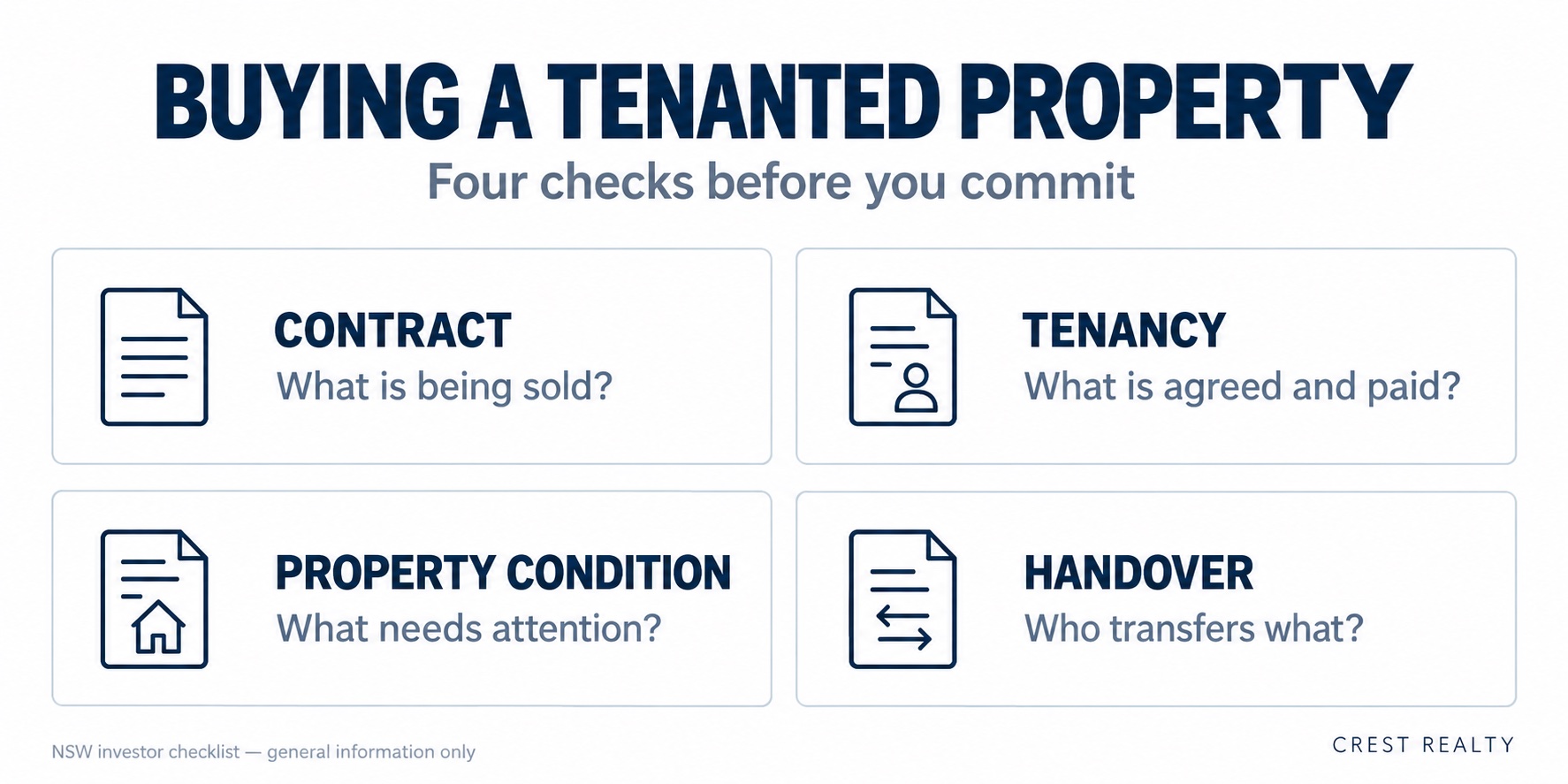
A property advertised with a tenant in place can look like a straightforward investment: buy the home and continue receiving rent.
There can be practical advantages. An established tenancy may reduce the need for an immediate leasing campaign and provide a record of how the property has been managed. But occupancy alone does not establish reliable income, a sound building or a suitable investment.
You are assessing both the property and the tenancy attached to it. Before committing, understand what is documented, what remains uncertain and whether the arrangement fits your plans.
1. Confirm what the sale contract actually promises
Start with the contract, not the listing headline. Is the property being sold subject to an existing tenancy, or does the contract require vacant possession? Ask your solicitor or licensed conveyancer to explain the position, the tenancy documents and any relevant special conditions before you exchange.
NSW Government’s purchase-preparation guidance specifically identifies vacant or tenanted status as something to check in the sale contract.
Do not assume that buying the property gives you immediate access to live in it or renovate it. A sale is not, by itself, an instruction for a tenant to leave. NSW landlords need a lawful ground and the applicable process to end a tenancy; notice requirements depend on the agreement and circumstances. See the official termination guidance.
If your purchase depends on a particular possession date, raise that with your legal adviser before committing—not after arranging removalists or trades.
2. Read the current tenancy, not just its expiry date
Request the current agreement and any documented variations through the proper sale and legal channels. Check the fixed-term dates or periodic status, agreed rent, inclusions and relevant arrangements affecting the property’s use.
A fixed-term end date should not be treated as a guaranteed vacancy date. If the tenancy has not lawfully ended, it generally continues periodically when the fixed term finishes without a new agreement. NSW tenancy-agreement guidance explains the distinction.
Ask whether there are outstanding notices, disputes, agreed concessions or unresolved requests that could affect your plans. Where information is missing, record the gap and have your adviser explain its significance rather than assuming that an old agreement tells the whole story.
Review the tenancy on factual records and lawful obligations, not assumptions about the people who occupy the home. Tenant information should be handled securely and only for an appropriate purpose.
3. Separate the current rent from a future rental estimate
Three different figures can appear in a sales discussion:
- the rent currently payable under the tenancy;
- the rent shown as actually received in the ledger; and
- an estimate of what a comparable property might achieve in the market.
They answer different questions. Ask for an up-to-date rent ledger, an explanation of any arrears or credits, the last effective increase date and copies of relevant notices through the authorised process.
Do not build the purchase case on an assumed increase immediately after settlement. Changes of ownership can affect how rent-increase provisions apply; the agreement, applicable rules and notice requirements still need specific review. A market appraisal is not permission to charge a different rent. Check the current NSW rent-increase guidance with your adviser before relying on an increase or its proposed date.
For the evidence behind an estimate, see our Sydney rental-appraisal guide. Assess the purchase using verified current income as well as a separate, clearly labelled future scenario.
4. Investigate condition even when the home is occupied
A tenant living in the property is not a building inspection. Request available condition and routine-inspection reports, maintenance history and details of unresolved repair requests. Then arrange appropriate independent pre-purchase checks; tenancy records and building reports serve different purposes.
NSW guidance on inspection reports explains that reports have limits. Ask what was inaccessible, what was excluded and whether specialist investigation is needed. A recent inspection date does not mean every issue was checked or resolved.
Arrange access through the selling and managing agents under the applicable tenancy rules. Do not treat the owner’s permission as a substitute for those requirements. NSW access guidance sets out the tenant’s privacy protections and entry restrictions.
Budget for necessary maintenance separately from optional improvements. Landlords have ongoing repair and safety responsibilities; an occupied property does not remove them. See NSW landlord repair obligations.
5. Compare the whole ownership position
Existing rent is only one part of the decision. Compare expected receipts with finance costs, agreed management fees, insurance, rates, applicable levies, maintenance and an allowance for interruptions to income. Confirm the costs relevant to the particular property rather than applying a generic percentage.
Ask yourself: if the tenant later leaves, does the property still suit the renters you expect to attract? Would essential work or a change of tenant require a larger cash reserve than you have allowed?
A vacant property may offer more practical flexibility for preparation before letting, but may also require advertising, tenant selection and a period without rent. A tenanted property may offer continuity, but less flexibility for your immediate plans. Neither is automatically the better investment.
Have your lender, accountant and other relevant advisers assess your own position. Do not treat advertised rent as guaranteed cash flow or a promise that finance or insurance will be available on particular terms.
6. Plan the handover before settlement
Agree who will coordinate the tenancy handover and who is responsible for each outstanding item. Your solicitor or conveyancer should address rent and other settlement adjustments; your property manager should be ready to receive the records needed for ongoing management.
Use a short handover checklist:
| Item to confirm | Question to resolve |
|---|---|
| Agreement and notices | Which current documents and unresolved matters will be handed over? |
| Rent records | What is paid to date, and how will credits, arrears and adjustments be treated? |
| Bond record | Who will arrange the required owner or agent update? |
| Property records | Which condition reports, repair records, keys and access devices are available? |
| Tenant communication | Who will explain the ownership change and verified contact/payment details? |
NSW provides a change-of-agent-or-owner process for updating bond information, including an option within Rental Bonds Online for registered users. Have the responsible parties confirm the appropriate process; do not assume the bond record updates simply because settlement occurs.
Also confirm your management arrangements. A residential tenancy agreement and a management agency agreement are different documents. NSW guidance requires a written agreement when an owner appoints an agent; agree the services, fees and responsibilities rather than assuming the seller’s arrangements are yours. See NSW rental-management guidance.
Make the purchase and management decisions together
A tenanted investment property can make sense when the property, tenancy, verified income and your ownership plans fit together. The useful question is not simply “Is it already rented?” but “Do I understand what I am buying and what I will need to manage?”
Explore Crest Realty’s buying services and property management services, or contact our team to discuss the property type, location, occupancy position and your intended timing. Keep legal and finance advice with the appropriate independent professionals.
Please begin with a general description. Do not send tenant identity documents, banking information or a complete tenancy file through the public enquiry form.
General information for NSW residential property investors, checked against the linked official guidance on 19 October 2026. Not legal, tax, financial or personal investment advice. Contract terms, exceptions and circumstances matter; obtain advice before exchanging contracts, changing rent or serving notices. No rental income, occupancy, capital growth or investment outcome is guaranteed.