
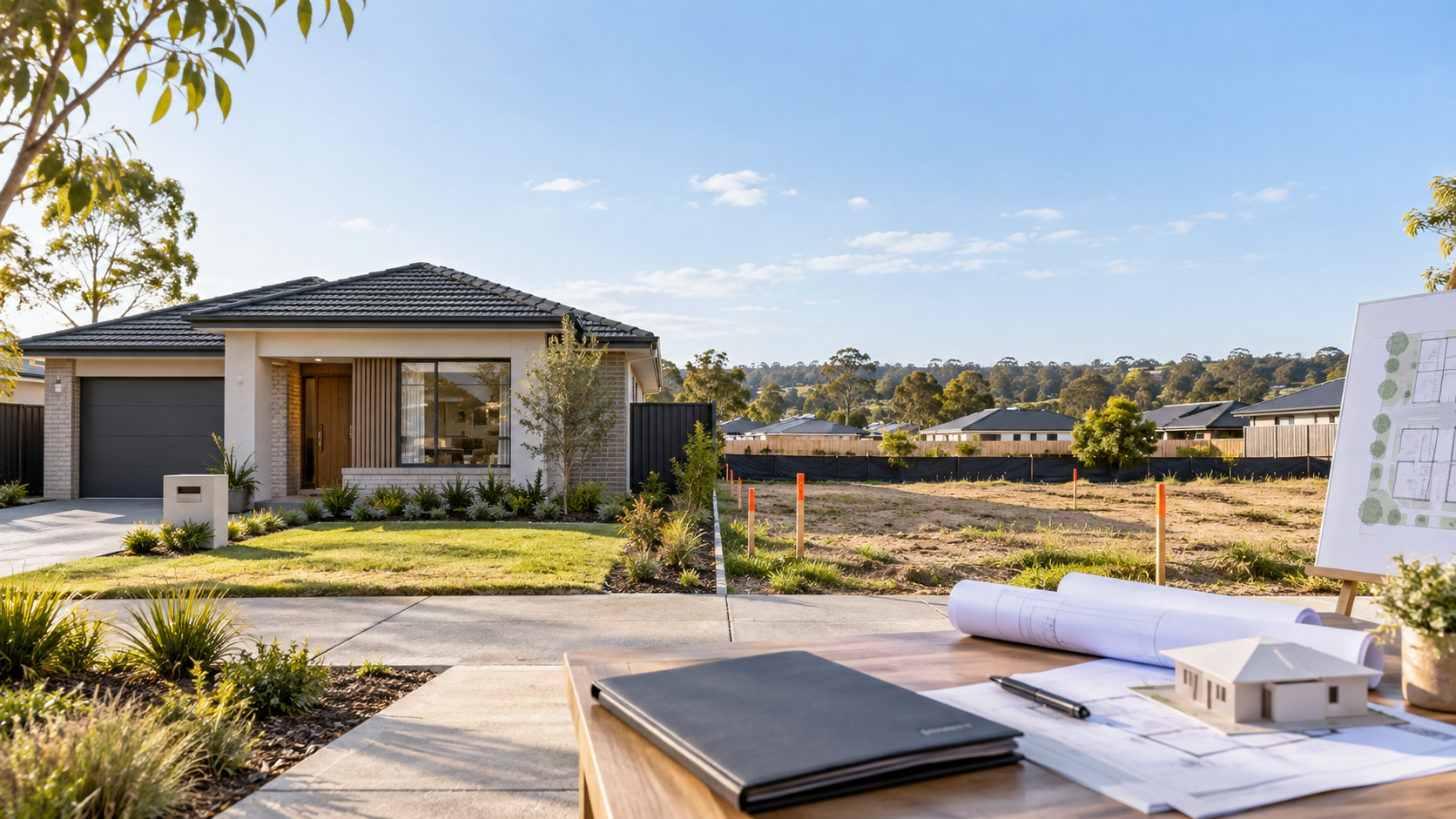
Buying a completed or near-completed villa under one contract can feel very different from buying a house-and-land package. The price tag may look similar, but the timing, finance, construction risk, flexibility and transfer-duty analysis can be quite different.
Short answer: a single contract is usually simpler and more predictable, while a genuinely separate land contract and building contract can give you more control over the design and construction process. Neither structure is automatically cheaper, “interest free” or more tax-efficient. The documents, the parties, the timing and the way the arrangement operates matter more than the marketing label.
This article is a general NSW buyer guide, not legal, tax, finance or building advice. Before signing, ask an independent solicitor or conveyancer, lender and (where relevant) building professional to review the actual contracts.
First, clarify what the labels mean
A “single-contract villa” normally means one agreement covers the purchase of the land and a completed, near-completed or specified home. In some developments the home is already built; in others the contract may describe a turnkey result to be delivered by the developer or builder. Settlement is often linked to completion, but the exact trigger must be read in the contract.
A “house-and-land package” is a marketing description, not a legal structure. It may be sold with:
- one contract that effectively bundles the land and the home; or
- two contracts: one for the land and a separate building contract with a builder.
Two contracts only create a meaningful comparison when they are genuinely separate. If they are conditional on each other, negotiated as one arrangement, or involve related parties and coordinated completion, Revenue NSW may still examine the transactions together.
At-a-glance comparison
| Issue | Single contract | Separate land + building contracts |
|---|---|---|
| Convenience | One main agreement and one coordinated delivery path. | More documents, parties and milestones to manage. |
| Timing | Often settlement near completion, subject to the contract. | Land settlement and construction progress may occur on different timetables. |
| Finance | May be easier to budget, but the lender’s structure still controls funding. | Construction lending commonly uses progress draws and requires closer monitoring. |
| Design control | Plans, finishes and inclusions are usually more fixed. | Potentially more choice, but variations can increase cost and delay. |
| Duty and surcharge | Often assessed with the home and land together. | Never assume a saving: the substance of both contracts and any aggregation rules matter. |
| Risk allocation | More delivery risk may sit with the developer or seller, but read warranties and sunset clauses. | Buyer carries more coordination and builder-performance risk. |
1. Settlement and timing
With a completed villa, you can usually inspect the finished product, confirm inclusions and plan a clearer move-in date. A single contract for a home still under construction may defer settlement until practical completion or another defined event. Check what happens if completion is delayed, a certificate is not issued, or the developer relies on a sunset date.
With separate contracts, the land contract may settle before the home is built. That can mean an earlier deposit or land settlement, followed by a construction period with site, planning and inspection milestones. The cash-flow advantage is not automatic: you may need to pay interest, rent and other holding costs while construction continues.
2. Interest, progress payments and funding
“No interest during construction” is not a safe assumption. Ask the lender how the loan will be drawn, when interest begins, whether the land and build are assessed together, and what happens if the valuation or build price changes.
A standard construction facility commonly advances money progressively as work reaches agreed stages. Interest is generally calculated on the amount actually drawn, not the full approved limit, but the loan offer and lender policy control. Compare the total cost of land, build, interest, lender fees, valuation fees, rent, rates and contingency—not just the advertised package price.
3. Transfer duty: read the documents, not the brochure
NSW transfer duty is generally calculated on the property’s dutiable value, which can be the greater of the consideration and market value. Revenue NSW guidance specifically discusses transactions involving land and improvements, including house-and-land arrangements. See Revenue NSW guidance on determining dutiable value and the current transfer-duty calculation page.
A separate building contract does not, by itself, guarantee that duty is assessed only on vacant land. Revenue NSW’s off-the-plan and house-and-land guidance shows why the timing, contract terms and whether the home is to be built are important. Transactions can also be aggregated when they are substantially one arrangement or involve the same or associated parties. Get written advice on your exact documents before relying on a duty estimate.
4. Foreign purchaser surcharge
If the buyer is a foreign person for NSW duty purposes, surcharge purchaser duty may apply in addition to ordinary transfer duty. Revenue NSW currently states that the surcharge rate for residential-related property is 9% for relevant contracts entered into on or after 1 January 2025. Read the Revenue NSW explanation of surcharge purchaser duty.
That rate is not a shortcut to a conclusion about a package. Whether land, a partially completed home or an improvement is included depends on the legal and factual character of the transaction. Citizenship, visa status, ownership structure, exemptions and the contracts themselves can all matter. Treat every online calculator as an estimate only.
5. Flexibility and control
A single-contract villa can be attractive when you value a defined specification, a shorter decision list and a more visible end product. The trade-off is that changes to layouts, finishes, appliances or landscaping may be limited or priced as variations.
A separate building contract can allow more input into plans, inclusions and upgrade choices. That control comes with responsibility: document every variation, confirm who owns design copyright, check provisional sums and prime-cost items, and understand how changes affect the completion date and fixed-price protection.
6. Risk and coordination
For a one-contract purchase, check the seller’s obligations, defects process, inclusions, warranties, strata or community-title documents (if applicable), settlement conditions and what happens if the finished home differs from the display specification.
For a two-contract purchase, separately review the builder’s licence and insurance, the building contract, progress-payment schedule, commencement conditions, site costs, variations, delay clauses, termination rights and dispute process. Confirm that the land contract and building contract do not leave you committed to one while the other can be cancelled or materially changed.
Which structure may suit which buyer?
- Choose simplicity: a single contract may suit a buyer who wants a defined product, a clearer completion pathway and fewer parties to coordinate.
- Choose control: genuinely separate contracts may suit a buyer who wants design input, can manage construction decisions and has a realistic contingency.
- Choose caution: if the duty, foreign-surcharge or finance outcome is the main reason for the purchase, pause until independent written advice confirms the result.
Questions to ask before signing
- Exactly what property and improvements are covered by each contract?
- Who are the contracting parties, and are any parties related or acting under a common arrangement?
- When is the deposit paid, when does each settlement occur, and what event triggers completion?
- What are the lender’s approved value, drawdown stages, interest assumptions and conditions?
- Which plans, finishes and inclusions are fixed, and how are variations priced and approved?
- What happens if approvals, titles, construction or settlement are delayed?
- Has an independent adviser assessed transfer duty, surcharge purchaser duty, GST and any investor or foreign-buyer issues on the actual documents?
- What defects, warranties, insurance and dispute rights will you have after completion?
Bottom line
A single-contract villa usually buys convenience and a more defined delivery path. A house-and-land package with genuinely separate contracts may provide more design control and a staged construction process. The right choice depends on your finance, risk tolerance, timing and the quality of the contractual protections—not on a promise that one format is always cheaper.
Before exchanging contracts, have the full document set reviewed by an independent NSW solicitor or conveyancer and confirm the funding position with your lender. If duty or surcharge is important to the decision, ask for advice that addresses the actual parties, dependencies, timing and intended use.
Important information: This article is general information for NSW property buyers and was prepared for education only. Laws, rates, concessions and Revenue NSW practice can change. It is not legal, tax, financial, lending or building advice, and it does not replace advice on your own contracts.